 By
By 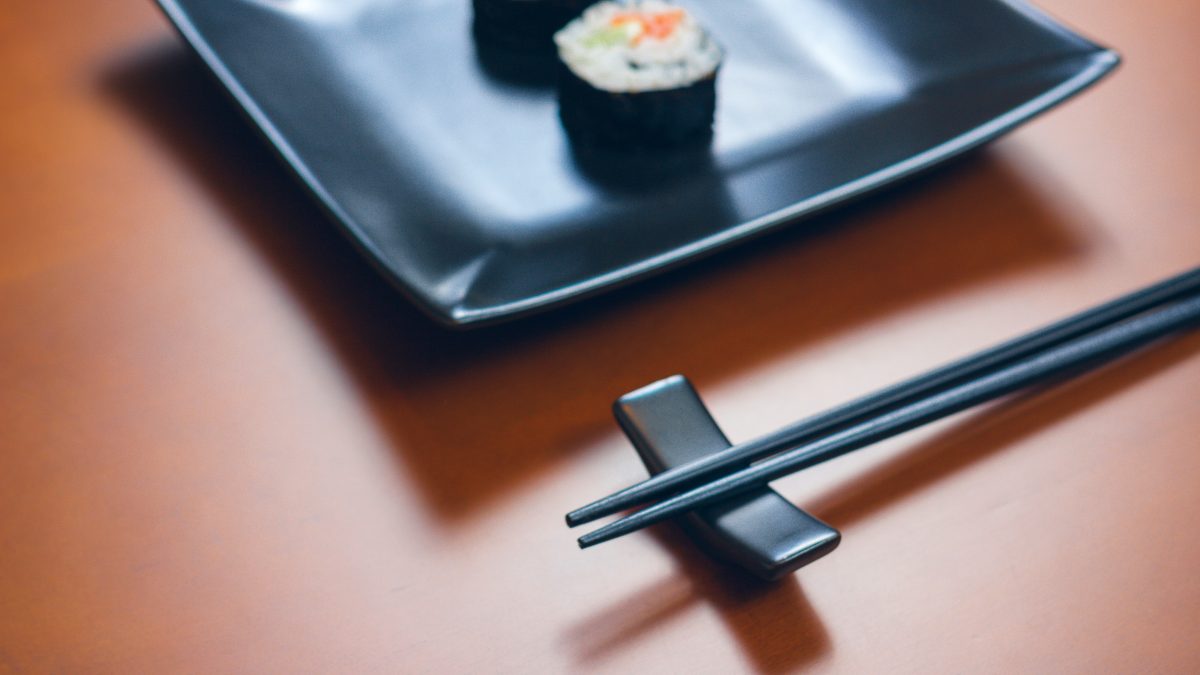
Pick up a piece of food with your chopsticks, then set them down mid-meal by laying them flat across the rim of your rice bowl. In most of the world that’s unremarkable. In Japan, two specific chopstick habits land uncomfortably close to a funeral rite, and visitors usually only find out after they’ve already done one of them. None of this is written into law and nobody is going to march you out of a restaurant for it — but chopstick etiquette in Japan is one of those unwritten systems that locals absorb as children and guests usually have to learn the hard way.
The short answer
- Two mistakes matter far more than the rest
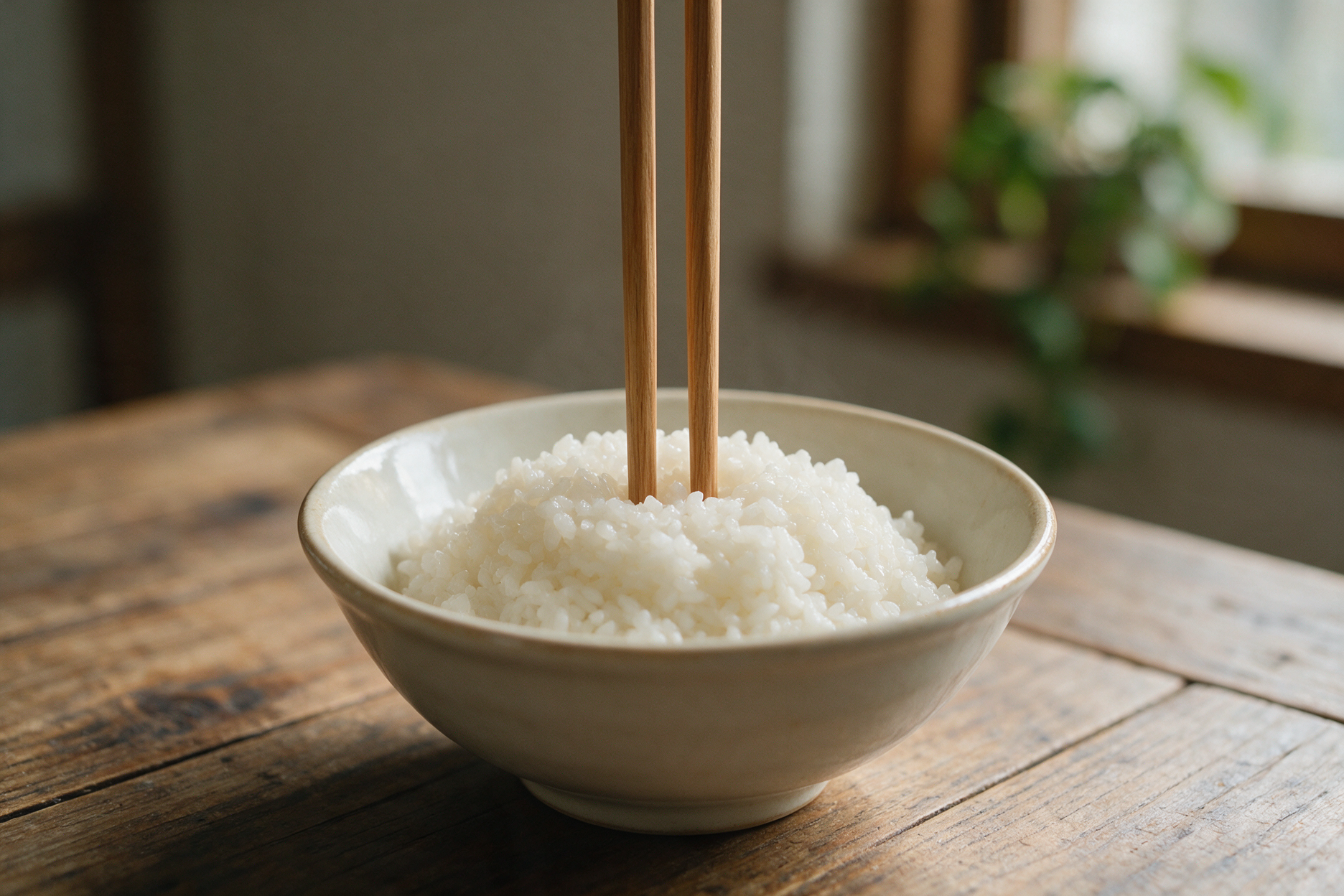
- sticking chopsticks upright in a bowl of rice, and passing food from your chopsticks to someone else’s. Both echo funeral ritual.
- Nothing here is law.
- This is etiquette, not a fineable offence — nobody checks and nobody is stopped at the door.
- Smaller habits (pointing, stabbing, rummaging) get noticed but are rarely corrected out loud,
- especially with a visitor.
- Rest your chopsticks on a hashioki
- between bites, or fold the paper wrapper into one if the table doesn’t provide a rest.
- To share a dish with no serving chopsticks provided,
- turn your own pair around and use the handle end.
Why this list is longer than “don’t point with your fork”
In most cuisines, chopstick manners are ordinary table manners — the kind that varies from one household to the next and draws, at worst, a raised eyebrow. In Japan, two specific gestures are tied directly to funeral and cremation ritual, which is why they carry more weight than everything else on this page put together. The rest of the list is closer to the familiar kind of table manners: habits that mark you as inattentive rather than habits that unsettle the room.
The two rules that actually matter
Tate-bashi — sticking a pair of chopsticks upright into a bowl of rice — is the single most-mentioned taboo on this list, and for a specific reason. At a Japanese funeral, a bowl of rice with chopsticks standing straight up in it is placed beside the deceased as an offering. Chopsticks left standing in your dinner don’t read as a quirky habit; they read as a direct echo of a funeral altar, which is about the fastest way to make a Japanese dining companion go quiet.
Hashi-watashi — passing a piece of food directly from your chopsticks to someone else’s — is the other one. It mirrors a specific step at a Japanese cremation, where family members pass a deceased person’s bones into an urn, each piece handed chopstick-to-chopstick between two people. Doing that at a dinner table, even by reflex because someone’s hands are full, isn’t something an apology smooths over easily. If you want to share food, put it on a small plate first and let the other person pick it up themselves.
The smaller habits that mark you as not paying attention
Below those two sits a longer list of smaller slips, each worth knowing but none worth losing sleep over. A waiter won’t say anything, and a Japanese host will usually let a visitor’s version of these pass without comment — but whoever’s eating across the table from you will clock it.
| Habit | How it lands |
|---|---|
| Sticking chopsticks upright in rice (tate-bashi) | Avoid entirely — echoes a funeral offering |
| Passing food chopstick-to-chopstick (hashi-watashi) | Avoid — set the food on a plate instead |
| Pointing chopsticks at a person or dish | Mildly rude, rarely mentioned aloud |
| Stabbing food to pick it up (sasu-bashi) | A common beginner habit, not a big deal occasionally |
| Hovering or rummaging over a shared dish (mayoi-bashi) | Noticed — pick one thing and commit |
| Crossing your chopsticks on the table | Minor — associated with funeral place settings |
| Licking or sucking chopsticks clean | A table-manners issue more than a taboo |
| Using chopsticks to drag a plate closer | Mildly impolite, not taboo |
| Resting chopsticks across the bowl (watashi-bashi) | Minor — use a hashioki when one’s provided |
| Using the opposite end to serve from a shared dish | Correct, when no serving chopsticks are out |
Where to rest your chopsticks between bites
A hashioki is the small ceramic, wood or glass rest set beside your plate at most sit-down restaurants, ryokan meals and sushi counters — its entire job is to give your chopsticks somewhere to go that isn’t the bowl or the table. Set them down tips-first, resting only the pointed ends on the rest.
Casual places — a ramen counter, a standing soba shop, most convenience-store meals — often skip the hashioki altogether. The accepted workaround is to fold the paper sleeve your disposable chopsticks came in into a small rest, which is exactly what it’s designed for. Laying chopsticks directly on the table, tips touching the surface, is the fallback everyone resorts to when there’s genuinely nothing else — not ideal, but far from a serious error.
Disposable chopsticks: splitting them without the theatre
Casual restaurants and convenience stores hand out disposable wooden waribashi, pre-split at the top and ready to pull apart. Split them cleanly, straight down the middle. Rubbing the two halves together afterwards — a habit some visitors pick up to smooth away splinters — reads in Japan as a quiet comment on the restaurant serving cheap chopsticks, and better places take mild offence at it. If a splinter is genuinely bothering you, deal with it quietly rather than sawing the sticks against each other at the table.
Sharing a dish with no serving chopsticks
Izakaya meals are built around shared plates, and the better ones put out a set of toribashi — serving chopsticks — for exactly this reason. When none appear, the accepted workaround is to turn your own chopsticks around and use the handle end, the part that hasn’t touched your mouth, to take food from the shared plate, then flip back to eat. Close family will sometimes skip this step with each other, but with anyone outside that circle, flipping the chopsticks is the safe default and nobody will think twice about you doing it.
If you only remember two things
Skip the upright position in the rice bowl, and skip handing food from your chopsticks straight to someone else’s. Everything else on this page — pointing, stabbing, hovering, crossing — gets noticed at most, not judged. Get the two funeral-adjacent gestures right and the rest takes care of itself with a bit of attention.
What locals genuinely don’t mind
Worth balancing all that against what nobody actually minds. An imperfect chopstick grip draws no comment — plenty of adults in Japan hold them in a way a teacher would correct, and nobody treats it as a character flaw. Using your fingers for a prawn shell, a chicken bone or an edamame pod is completely normal; chopsticks were never meant to handle those. And the beginner habit of occasionally stabbing a slippery piece of food instead of pinching it draws, at most, a small smile, nothing like the reaction a funeral-adjacent gesture gets. The goal isn’t flawless technique. It’s avoiding the handful of moves tied specifically to death ritual, and letting everything else be the ordinary table manners it actually is.
Chopstick manners sit alongside Japan’s other quiet dining customs — the same instinct that has people stepping aside before finishing a skewer bought on the street shows up again once you’re seated. If the meal is in a tatami room, the shoes come off before the chopsticks go anywhere near the table; see shoes off in Japan for where that boundary sits. And none of this changes what you leave behind at the register — tipping in Japan explains why a good meal gets a bow on the way out, not a few hundred yen on the table. More of the same in line E.
Sources
- Japan National Tourism Organization — general visitor etiquette guidance on dining customs.
- Consulate-General of Japan information pages — public guidance on funeral-associated taboos, including chopstick placement.
- Japan Ryokan & Hotel Association — guidance on table manners in traditional dining settings.
Data checked: 2026-10-09


